
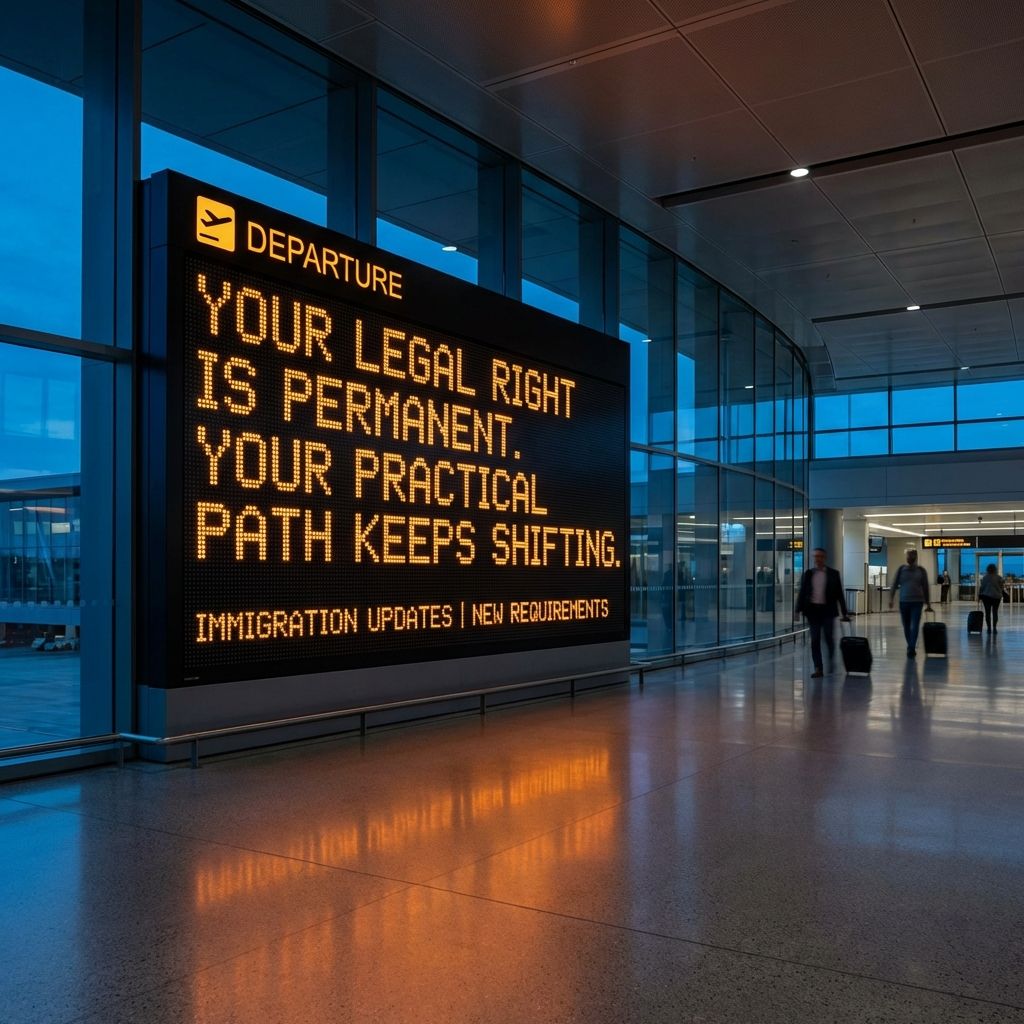
I’ve spent considerable time examining how British immigration regulations shift, particularly as they affect British citizens abroad planning to return home. The patterns reveal something most people overlook.
The factors shaping these changes aren’t abstract policy debates. They’re measurable pressures that force government action.
And they affect more than just returning expats. Foreign-born British citizens—people who hold citizenship through descent but have never lived in the UK—face the same shifting landscape. So do British citizens popping back for a nephew’s wedding or visiting elderly parents for Christmas.
The regulations don’t distinguish between a permanent return and a two-week holiday. The documentation requirements apply equally.
The Numbers That Changed Everything
Long-term net migration reached 944,000 in the year ending March 2023. Immigration hit 1,469,000 whilst emigration stood at 525,000.
This happened despite Prime Minister Boris Johnson’s 2019 pledge to reduce net migration below 250,000 per year.
The gap between promise and reality created political pressure that couldn’t be ignored. What followed has been described as “the biggest overhaul” of the UK’s legal migration model in 50 years, excluding Brexit.
The government has introduced sweeping changes designed to make it harder to move to and settle in the UK.
When public opinion shifts this dramatically, policy follows.
How Public Perception Shapes Regulation
Public concern about immigration doesn’t emerge in a vacuum. The UK saw significant rises in net migration, particularly from EU countries under freedom of movement principles.
This influx led to concerns about strain on public services, housing, and employment. Media coverage and political discourse amplified these worries.
The response was predictable. Over 16,000 people without the right to be in the UK—including failed asylum seekers, foreign criminals, and other immigration offenders—were removed or deported from British soil between July 2024 and January 2025.
This enforcement push reflects broader political pressures that shape immigration policy across the board.
British citizens returning home get caught in these broader shifts.
The Historical Pattern
Modern immigration border controls originated in 1905. The beginnings of today’s system can be traced to the final decade of the 19th century and political debate surrounding perceived growth in Eastern European Jewish immigration.
Public perception and political responses to migration have consistently influenced regulatory changes throughout British history. The current situation follows an established pattern.
The Earned Settlement Revolution
On 20 November 2025, the government outlined its intention to move to an “earned settlement” system. The baseline residence period for settlement will increase from five years to ten years for most migrants.
This matters because the rules apply to anyone who doesn’t already hold settlement when the changes take effect.
The government is consulting on whether transitional arrangements should apply to those already on settlement pathways. The Home Secretary told MPs that immigration rules will begin changing from April 2026.
This tight timeline affects British citizens abroad planning returns.
You need to understand how these changes interact with your right of abode. Unlike indefinite leave to remain, your right of abode is normally valid for life and won’t lapse regardless of how long you stay outside the UK.
It cannot be revoked unless you lose your Commonwealth or British citizenship.
In comparison, indefinite leave to remain status automatically lapses if you’re absent from the UK for two or more consecutive years. This distinction becomes critical for British citizens returning after extended absences.
The Documentation Trap
From 25 February 2026, dual British citizens are advised to have a valid British passport or certificate of entitlement to avoid problems like being denied boarding when travelling to the UK.
British dual nationals whose other nationality is for a non-visa national country used to be able to travel to the UK using their foreign passport without a certificate of entitlement.
The introduction of electronic travel authorisation requirements changed this.
It’s now more difficult for people with dual citizenship to use their foreign passport to travel to the UK. The cost difference creates another barrier. Applying for a certificate of entitlement costs £589 compared to £94.50 for an adult British passport online.
This hits foreign-born British citizens particularly hard.
Many hold British citizenship by descent—through a British parent or grandparent—but were born and raised elsewhere. They might visit the UK once every few years for family events. A cousin’s wedding. A grandmother’s funeral. A summer holiday with relatives in Cornwall.
They’ve never needed anything beyond their British passport. But now, if they’re dual nationals trying to use their other passport for convenience, they face the certificate of entitlement requirement and its £589 cost.
For someone making a ten-day visit to attend a wedding, that’s an absurd barrier. But the regulations don’t account for visit duration or purpose. The carrier guidance applies the same way whether you’re returning permanently or visiting for a weekend.
Carriers are unlikely to deviate from the guidance because they can be penalised for bringing inadequately documented passengers to the UK.
How Expert Bodies Influence Policy
The Migration Advisory Committee might recommend that thresholds go up, go down, or stay the same. The Home Secretary doesn’t have to accept the committee’s recommendation, but it will be influential.
The committee was asked to report in June 2025.
This demonstrates how expert advisory bodies influence policy whilst ultimate decisions remain political. The balance between expert guidance and political imperatives shapes the final regulations you face.
Economic pressures add another layer.
When sectors face labour shortages, advisory committees might recommend easing restrictions. When unemployment rises or public services feel strained, recommendations typically move in the opposite direction.
The Foreign-Born Citizen Complication
I’ve noticed something that doesn’t get discussed enough. British citizenship by descent creates a category of people who are legally British but have minimal practical connection to the UK.
They hold British passports. They have the right of abode. But they might have been born in Australia, Canada, South Africa, or New Zealand to a British parent. They’ve lived their entire lives abroad.
Their relationship with the UK is often limited to occasional family visits. A week in London seeing relatives. A trip to Scotland for a family reunion. Attending a sibling’s wedding in Manchester.
The regulatory changes affect them differently than they affect returning expats.
Returning expats typically know they need current British documentation because they’re planning a permanent move. Foreign-born citizens visiting for holidays often don’t realise the documentation requirements have tightened.
They might show up at the airport with their Australian or Canadian passport, expecting to enter the UK without issue because they hold British citizenship. The electronic travel authorisation requirement catches them off-guard.
Airlines won’t board them without proper documentation. The carrier liability rules are clear. And suddenly a family visit becomes a bureaucratic nightmare.
The Visiting Family Reality
Let me paint a specific scenario. You’re a British citizen by descent living in Sydney. Your brother is getting married in Birmingham in three months. You’ve got your annual leave approved. You’ve booked accommodation.
You’re a dual Australian-British citizen. You’ve always travelled on your Australian passport because it’s more convenient for your frequent business trips to Asia.
Under the old rules, you could rock up at Heathrow with your Australian passport and enter without problems. British dual nationals from visa-exempt countries didn’t need additional documentation.
From 25 February 2026, that changes. You need either a valid British passport or a certificate of entitlement to your right of abode.
For a two-week visit to attend a wedding, you face a choice. Pay £589 for a certificate of entitlement, or get a British passport for £94.50. The British passport takes time to obtain if yours has expired.
This creates planning complications that didn’t exist before. Family emergencies become harder to respond to quickly. A parent falls ill in Manchester, and you need to travel urgently. But you can’t board the flight without the right documentation.
The regulations designed to control immigration create friction for legitimate family visits by British citizens.
The Long Residence Rule Changes
Under the updated Appendix Long Residence implemented in June 2025, time spent as a British citizen now counts as lawful residence towards the 10-year settlement period.
The exception is if your citizenship was revoked for deception.
Additionally, lawful residence in the Crown Dependencies—Jersey, Guernsey, or the Isle of Man—also counts towards UK settlement. These changes clarified previous inconsistencies affecting returning British citizens.
If you’ve spent time in the UK as a British citizen or in the Crown Dependencies, this time now counts towards settlement requirements in ways it didn’t before.
What This Means for Your Return
The factors driving immigration regulation changes operate on multiple levels simultaneously. Political pressure from record migration numbers combines with public concern amplified by media coverage.
Expert advisory bodies provide technical guidance that gets filtered through political decision-making. Historical patterns of response to migration continue to shape current policy.
British citizens returning home navigate the same regulatory environment that governs all immigration.
Your right of abode provides protection that indefinite leave to remain doesn’t offer. But you still face documentation requirements, cost barriers, and rule changes that affect your practical ability to return.
The earned settlement system extending residence requirements to ten years won’t directly affect your right of abode. But it signals the broader direction of policy. Tighter controls. Higher barriers. More documentation requirements.
The Practical Steps
If you’re a British citizen abroad—whether planning a permanent return or just visiting family for a holiday—you need current documentation. A valid British passport remains your clearest path to smooth re-entry.
This applies equally to foreign-born British citizens who rarely visit the UK. If you hold citizenship by descent and you’re planning to attend a family wedding, visit relatives during summer holidays, or respond to a family emergency, check your British passport status now.
If you hold dual citizenship, don’t rely on your foreign passport for UK travel after 25 February 2026. The electronic travel authorisation requirements create complications that a British passport avoids.
If you’ve been away from the UK for extended periods, understand how your time abroad affects any indefinite leave to remain status you might hold alongside your citizenship.
Track the consultation outcomes on transitional arrangements for the earned settlement system. Whilst these primarily affect non-citizens, they indicate how the government balances existing expectations against new policy directions.
The Underlying Pattern
Immigration regulation changes follow political and public pressure more than rational policy planning. Record migration numbers create demands for visible action.
That action takes the form of tighter controls, longer qualifying periods, and more complex documentation requirements.
British citizens—whether returning home permanently or visiting for family occasions—aren’t the primary target of these changes. But you’re affected by the same regulatory environment that governs all immigration.
The distinction between right of abode and other immigration statuses provides protection. Your citizenship can’t lapse through absence the way indefinite leave to remain can.
But practical barriers still emerge. Documentation costs. Carrier requirements. Rule changes that create confusion about what you need to present at the border.
The current overhaul represents the biggest change in 50 years. That scale of reform creates uncertainty even for those with clear legal rights to enter the UK.
Understanding the factors driving these changes helps you anticipate what comes next. Political pressure from migration numbers won’t ease quickly. Public concern remains elevated. Expert advisory bodies will continue recommending adjustments based on economic and social factors.
The direction is clear. Tighter controls. Higher barriers. More complexity.
Your right of abode as a British citizen provides fundamental protection. But you still need to navigate the practical requirements of a system designed to restrict entry.
Keep your British passport current. Understand the documentation requirements. Track the regulatory changes as they’re implemented from April 2026 onwards.
The factors shaping British immigration regulation operate beyond any individual’s control. But understanding them helps you prepare for the practical realities—whether you’re returning home permanently or simply visiting family for a wedding.

Leave a comment