
Executive Summary: Heineken’s 6,000 job cuts signal more than cost-cutting. The beer industry faces permanent structural change driven by shifting consumer preferences, medical interventions like GLP-1 drugs, and collapsing on-trade channels. Non-alcoholic beverages are growing 25% whilst traditional beer production has declined for five consecutive years. The real lesson applies beyond beer: when your core product assumption becomes untrue, efficiency gains won’t save you.
What’s Happening
-
Heineken is cutting 6,000 jobs (7% of global workforce) as EU beer production drops for the fifth straight year
-
Three forces driving change: generational behaviour shifts, GLP-1 weight-loss drugs reducing alcohol consumption by up to 75%, and on-trade channel decline
-
Non-alcoholic beer has grown 25% over five years, now representing 7.5% of EU consumption
-
Industry leaders are treating structural decline as a cyclical downturn, missing the fundamental shift
-
The real product was never alcohol. It was social connection, ritual, and relaxation
Heineken just announced 6,000 job cuts. That’s 7% of their global workforce gone.
Their CEO resigned. Profit outlook weakened. And they’re not alone. Carlsberg is cutting jobs too.
The headlines call it a downturn. I call it something else: a structural shift most executives are treating like a bad quarter.
I’ve watched businesses misread market signals before. The pattern is always the same. They cut costs, tighten operations, and wait for conditions to normalise.
What if normal isn’t coming back?
What the Numbers Are Telling Us
EU beer production has fallen from 367 million hectolitres in 2019 to 345 million in 2024. That’s the fifth consecutive year of decline.
This isn’t cyclical. The industry itself admits the downturn is no longer cyclical but structural, driven by fragile consumer confidence, inflationary pressure, and rising costs across the value chain.
When I see five years of consistent decline, I don’t see a market waiting to recover. I see a market being replaced.
The question isn’t whether beer will bounce back. The question is: what’s taking its place?
Key Point: Five years of data shows structural, not cyclical, decline. The market isn’t recovering because something new is taking its place.
Three Forces Driving the Shift
Force One: Generational Behaviour
Gen Z drinks about one-third less beer and wine than previous generations. Adults under 35 who drink dropped from 72% in 2001-2003 to 62% in 2021-2023.
Here’s where things get interesting. Recent data from IWSR suggests Gen Z participation has mostly normalised and looks indistinguishable from other generations.
So if Gen Z isn’t the problem, what is?
Force Two: Medical Intervention
GLP-1 weight-loss drugs reduce alcohol consumption by as much as 75%, and 50% per occasion, according to Morgan Stanley research. Industry analysts call this the iceberg on the horizon.
Force Three: Channel Collapse
On-trade beer consumption in pubs, cafés, and restaurants has fallen from a third of all beer consumed in Europe to around a quarter.
This matters more than the numbers suggest. Hospitality generates a disproportionate share of value and employment. When this weakens, the ripple effects hit agriculture, logistics, events, and tourism.
Key Point: The decline isn’t about one demographic. It’s about medical interventions, changing consumption patterns, and collapsing distribution channels working together.
Why Heineken’s Response Misses the Point
Heineken’s CEO acknowledged the cuts came partly from AI and digitisation, with around 3,000 roles moving to business services where technology and AI will drive productivity savings.
I’ve seen this playbook before. Cut costs. Automate. Streamline. Wait for demand to return.
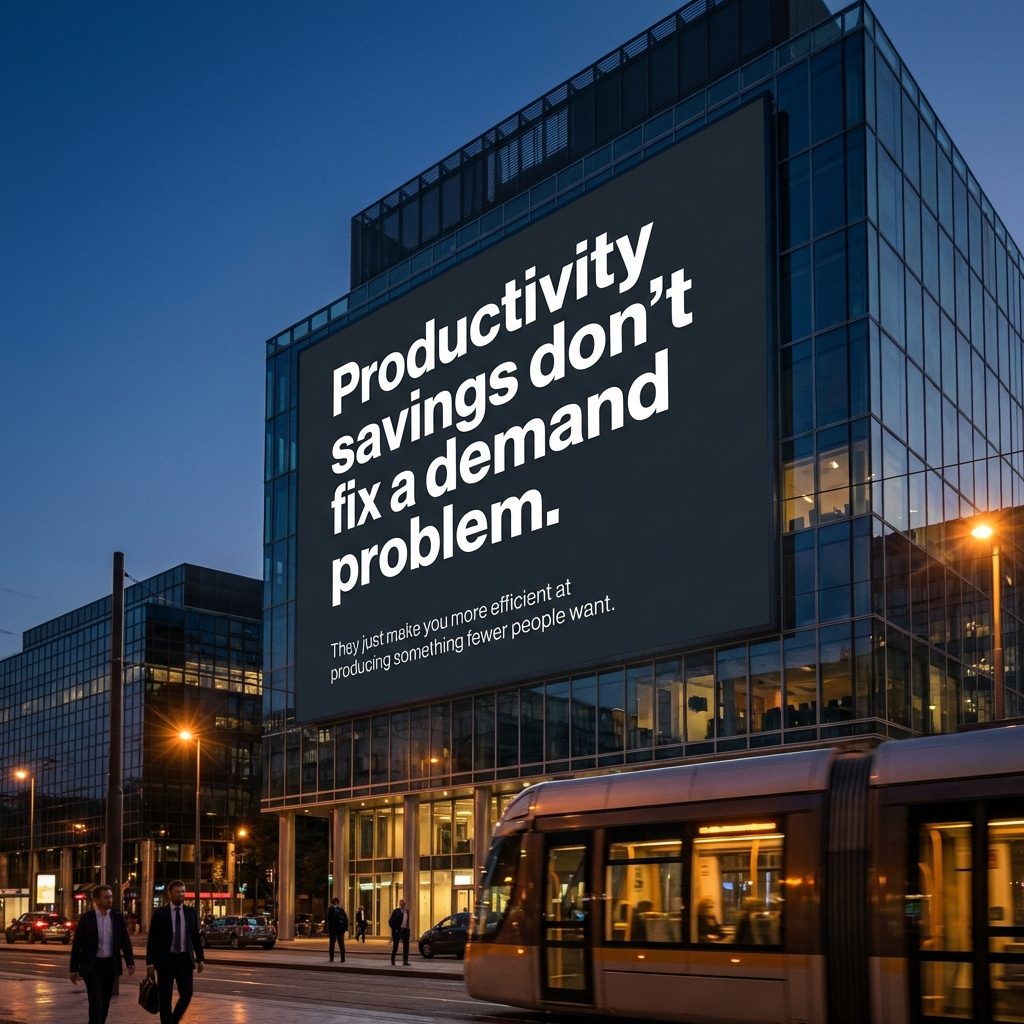
Productivity savings don’t fix demand problems. They make you more efficient at producing something fewer people want.
The IMF’s managing director warned AI is hitting the labour market like a tsunami. Most countries and businesses aren’t prepared.
Heineken is treating this as an efficiency problem when it’s a relevance problem.
Key Point: Cost-cutting and automation won’t solve a fundamental demand shift. You’re optimising for a market that’s disappearing.
The Growth Segment Reveals Everything
Non-alcoholic beer is the fastest-growing segment in the industry. It has expanded by 25% over five years and now represents 7.5% of EU beer consumption.
Heineken is doubling down on this trend. They’re not looking beyond beer. They’re using brand power to lean into non-alcoholic options, which command premium pricing and position as more natural.
This tells you where the market is heading. People still want the ritual, the taste, the social experience. They don’t want the alcohol.
The beer companies that survive won’t be the ones who make the best beer. They’ll be the ones who understand what job beer was doing in people’s lives and find new ways to do the same job.
Key Point: The only growing segment proves people want the social ritual and experience, not the alcohol itself.
What This Means Beyond Beer
I’m not talking about beer here. I’m talking about what happens when the core assumption of your business model stops being true.
For decades, beer companies assumed people wanted alcohol. They competed on taste, brand, price, and distribution. What if the fundamental product was never alcohol? What if the real product was social connection, relaxation, and ritual?
When you misidentify what you’re selling, you miss the pivot point.
I’ve worked with businesses across multiple sectors. The ones that survive disruption understand the job their product does, not the product itself.
Heineken is cutting 6,000 jobs because they’re still trying to sell beer in a world moving past it. The smarter play would be to ask: what are we selling, and how do we deliver this without alcohol?
Key Point: Survival depends on understanding what job your product does for customers, not defending the product format itself.
Where This Goes Next
In five years, alcohol company will be obsolete. The survivors will be beverage companies that happen to make some products with alcohol.
The shift is already happening. The data is clear. Consumer behaviour is changing. Medical interventions are accelerating things.
The question is whether leadership teams will recognise this fast enough to adapt.
Most won’t. They’ll keep cutting costs, waiting for the market to return. They’ll treat structural decline as a temporary setback.
And they’ll be replaced by companies that understand what business they’re in.
This isn’t about beer. It’s about every business built on an assumption that’s quietly becoming untrue.
The companies that thrive in the next five years won’t be the ones with the best products. They’ll be the ones who see the shift coming and move before they have to.
Heineken is moving now because they have to. The question for your business is: will you wait that long?
Key Point: The window to adapt is narrowing. Companies that wait for certainty will be too late.
Common Questions
Is the beer industry really declining or is this temporary?
The decline is structural, not cyclical. EU beer production has dropped for five consecutive years, from 367 million hectolitres in 2019 to 345 million in 2024. Industry leaders themselves acknowledge this is permanent change driven by shifting consumer preferences, medical interventions, and channel collapse.
Why are GLP-1 drugs such a threat to alcohol sales?
GLP-1 weight-loss drugs reduce alcohol consumption by up to 75% per week and 50% per occasion, according to Morgan Stanley research. As these medications become more widely prescribed, they represent what analysts call an iceberg on the horizon.
Hasn’t Gen Z normalised their drinking habits?
Recent IWSR data suggests Gen Z alcohol participation has mostly normalised and looks indistinguishable from other generations. The decline isn’t driven by one demographic. The forces are broader: medical interventions, health consciousness, and changing social rituals across all age groups.
Why is non-alcoholic beer growing when traditional beer is declining?
Non-alcoholic beer has grown 25% over five years because people still want the social ritual, taste, and experience. They don’t want the alcohol. This proves the product was never about alcohol. It was about connection, relaxation, and social participation.
How should beer companies respond to this shift?
The successful response isn’t cost-cutting or waiting for markets to recover. Companies need to identify what job their product does for customers and deliver that job in new ways. Heineken is investing in non-alcoholic options. Others need to ask: what are we selling, and does alcohol need to be part of the answer?
What does this mean for industries beyond beer?
This pattern applies everywhere. When your core product assumption becomes untrue, efficiency gains won’t save you. Businesses need to understand what job they’re doing for customers, not defend the product format. The companies that thrive will be the ones who recognise shifts early and adapt before being forced to.
How quickly will this transformation happen?
The data suggests five years. Non-alcoholic segments are growing whilst traditional products decline consistently. Medical interventions are accelerating things. Leadership teams that wait for certainty will miss the window to adapt profitably.
Are job cuts the right response to structural decline?
Job cuts address cost structure, not demand problems. Heineken’s 6,000 job cuts make them more efficient at producing something fewer people want. The right response is strategic repositioning around what customers want, not operational efficiency around what they’re moving away from.
Key Takeaways
-
Beer industry decline is structural, not cyclical. Five consecutive years of falling EU production proves this isn’t a temporary downturn.
-
Three forces are driving change: shifting generational behaviour, GLP-1 drugs reducing alcohol consumption by up to 75%, and collapsing on-trade channels.
-
Non-alcoholic beer’s 25% growth reveals the truth: people want the social ritual and experience, not the alcohol itself.
-
Cost-cutting and automation don’t solve relevance problems. Heineken is optimising for a market that’s disappearing.
-
The real lesson applies beyond beer: when your core product assumption becomes untrue, understand what job you’re doing for customers and find new ways to do the same job.
-
Companies that recognise structural shifts early and adapt before being forced to will survive. Those waiting for markets to normalise will be replaced.

Leave a comment