
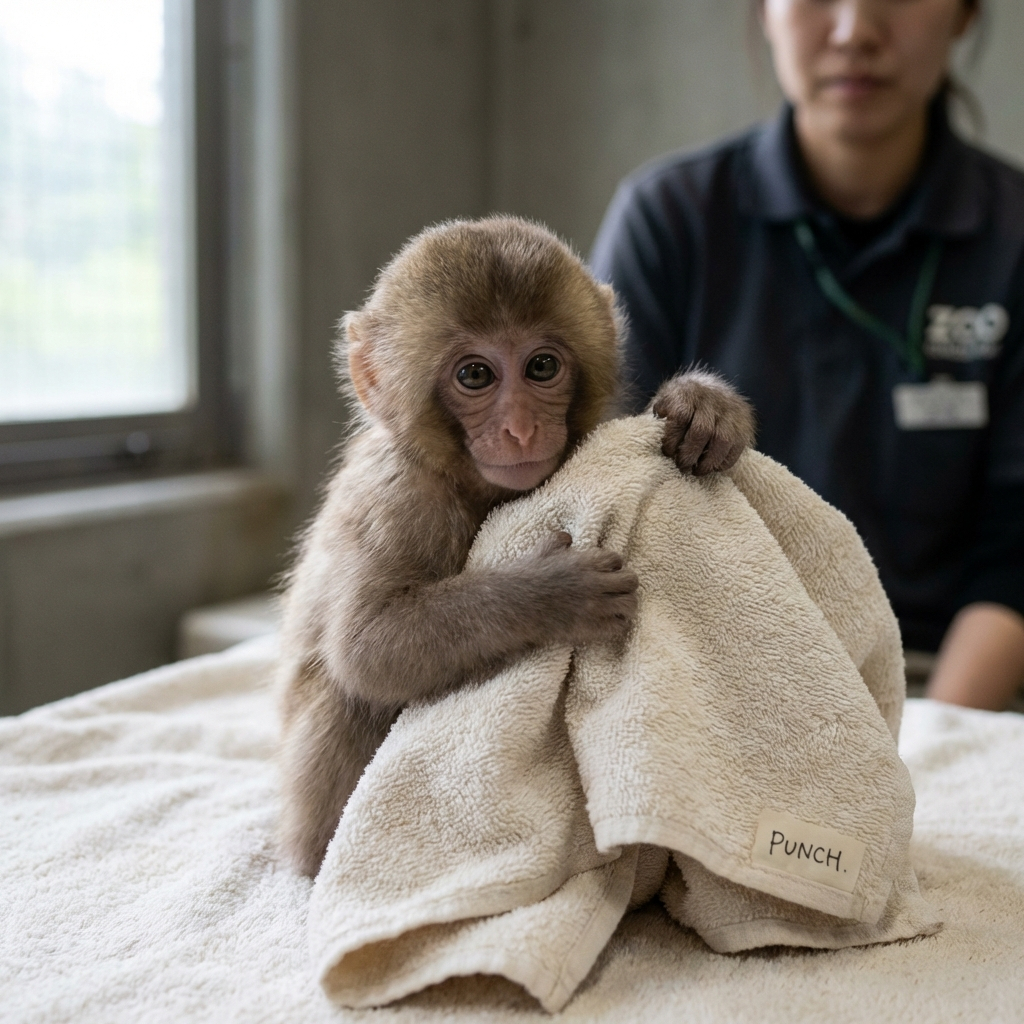
Executive Summary: When a baby monkey named Punch was rejected by his mother, the zoo gave him a stuffed toy for comfort. The story went viral, visitor numbers surged, and the zoo faced operational challenges they weren’t prepared for. This shows how businesses respond to visible distress versus hidden problems, why interim solutions matter, and how sudden attention exposes weak systems.
Core insights:
-
Visible vulnerability triggers immediate action. Hidden problems get ignored.
-
Viral attention exposes operational weaknesses fast.
-
Interim solutions buy time for permanent fixes when done right.
-
Early dysfunction shapes long-term capability in teams and systems.
-
Stories attract attention. Substance beneath them delivers value.
I wasn’t expecting to write about a baby monkey this week.
When I saw images of Punch (a tiny Japanese macaque clutching a plush toy at Ichikawa City Zoo), something clicked. Not the sentimental reaction you’d expect. Something deeper about vulnerability, connection, and how organisations respond when things go wrong.
Punch’s mother rejected him at birth. Zoo staff gave him towels and soft toys as substitutes. He clung to them with the same desperation any infant primate would show its mother. The images went viral. Visitor numbers surged. The zoo found itself managing crowds it had never seen before.
What interests me isn’t the story itself. It’s what happened next, and what that reveals about how we respond to visible distress versus hidden problems.
Why Do We Empathise With Helplessness Across Species?
Criminologist Jack Levin found something unexpected in his research. Respondents showed the same level of empathy for a baby, a puppy, and an adult dog. But significantly less for an adult human being.
The variable wasn’t species. It was perceived helplessness.
Vulnerability transcends categories. When something appears defenceless (whether it’s a baby monkey, a struggling team member, or a business facing collapse), our protective instincts activate. We pay attention. We want to help.
Here’s what I’ve noticed in business: we’re better at responding to visible distress than systemic problems.
A staff member breaks down in tears? We act immediately. The same person quietly burning out for six months? We miss it.
Punch’s story resonated because his vulnerability was visible. He was small, alone, clinging to something that couldn’t help him.
Key insight: Visible problems get solved because they create pressure. Hidden problems compound quietly until they become crises.
What Happens When Viral Attention Hits Your Operations?
The zoo wasn’t prepared for what happened next.
Visitor numbers increased dramatically after Punch’s story went viral. Zoo officials stated: “All of our staff were surprised” by the unexpected turnout. They apologised for entrance delays as crowds grew beyond normal levels.
This mirrors what happened with Moo Deng, the baby pygmy hippo in Thailand whose fame created similar operational challenges.
Sudden attention exposes your systems. When a business suddenly scales (through viral success, unexpected demand, or rapid growth), you discover which processes were built to handle pressure and which were held together with goodwill and manual workarounds.
The zoo had to adapt quickly. More visitors meant longer queues, strained facilities, and staff managing crowds they weren’t trained to handle. Sound familiar?
I’ve worked with businesses experiencing similar surges. A product mention on social media. A contract win that doubles revenue overnight. An acquisition that triples headcount.
The organisations that survive these moments have two things in common: they acknowledge they’re not ready, and they adapt fast.
Key insight: Sudden growth reveals which parts of your operation were built properly and which were held together with hope.
What Does Science Tell Us About Surrogate Attachment?
Infant monkeys instinctively cling to their mothers from birth. It’s not about food. It’s about comfort, security, and tactile feedback that shapes healthy development.
Research shows baby monkeys preferred soft, cuddly cloth surrogate mothers, even though she did not provide any nourishment. The conclusion: feelings of comfort and security are the critical components of maternal-infant bonding, which leads to healthy psychosocial development.
The zoo gave Punch towels and soft toys because they understood this. They couldn’t replace his mother, but they provided sensory input his developing brain needed.
Sometimes the best solution isn’t perfect. It’s adequate.
I see business owners paralysed by this regularly. They know the ideal solution (the perfect system, the right hire, the complete restructure). But they don’t have the resources to implement it yet. So they do nothing.
Punch’s stuffed toy wasn’t his mother. But it was enough to keep him alive whilst the zoo worked on the real solution: integrating him with other monkeys who could teach him what a toy never could.
The interim solution bought time for the permanent one.
Key insight: Adequate interim solutions beat perfect plans that never get implemented. The bridge matters when you’re building towards something better.
How Does Early Separation Shape Long-Term Development?
Research into maternal separation reveals something sobering. Removal of regulating sensory stimuli from the mother produces dysregulation of infant brain functioning and behaviour. Sensory stimulation from the mother during development is necessary for shaping healthy adult cognition and emotion in rodents, nonhuman primates, and humans.
The effects aren’t emotional. They’re neurobiological.
Early experiences shape how systems develop. This applies to businesses as much as biology.
A company experiencing early chaos without proper structure develops dysfunctional patterns. Teams forming during crisis mode often struggle to operate normally when things stabilise. People who learn their role through trial and error develop different capabilities than those who receive proper training.
The zoo understood this. Their goal wasn’t to keep Punch alive. It was to ensure he developed social and cognitive capabilities he’d need as an adult macaque.
They reported Punch is now “gradually deepening his interactions” with other monkeys. He’s being groomed, playing, testing boundaries, even being scolded. All part of normal social learning.
The intervention worked because they treated it as developmental, not remedial.
Key insight: How your team learns during crisis shapes how they operate long-term. Build proper foundations or you’ll spend years fixing dysfunction.
How Do Zoos Turn Attention Into Education?
Here’s what surprised me most about this story: the educational opportunity it created.
AZA-accredited zoos and aquariums educate over 180 million visitors each year about wild animals, their habitats, and conservation issues. They’ve trained more than 400,000 teachers over the past decade.
Visitors believe zoos play an important role in conservation education. They experience a stronger connection to nature, which prompts them to reconsider their role in environmental problems.
Stories like Punch’s serve as emotional entry points for broader conversations.
People came to see a baby monkey with a stuffed toy. What they encountered was a lesson in primate development, maternal bonding, and the complexity of animal care in captivity.
The same principle applies in business. You attract attention with the compelling story. You deliver value through the substance beneath it.
I’ve seen companies waste viral moments because they focused on attention, not the opportunity to demonstrate their expertise or values. The zoo showed people a cute monkey. They also explained why he needed the toy, what they were doing to help him, and how their approach aligned with broader conservation principles.
Key insight: Viral moments attract eyes. Substance keeps them and converts attention into trust.
Why Do Some Problems Get More Attention Than Others?
Research shows a strong negative correlation between empathy scores and the divergence time separating species from humans. The closer an animal is to us evolutionarily, the more empathy we feel.
Beyond a certain point, empathic perceptions stabilise at a minimum level. We don’t feel nothing for distant species. We feel less.
Primates like Punch evoke responses because they’re close enough to trigger our deepest empathetic circuits. We see ourselves in them. Their facial expressions, gestures, obvious distress all register as familiar.
This explains why some business problems get immediate attention whilst others languish. The issues feeling familiar, mirroring our own experiences, ones we imagine ourselves facing get solved.
Abstract problems, ones not triggering emotional recognition, get deprioritised.
I’ve worked with owners who obsess over customer complaints because they imagine being the frustrated customer. The same owners ignore cash flow warnings because financial projections don’t trigger the same visceral response.
Understanding this bias doesn’t eliminate it. But it helps you compensate for it.
Key insight: You solve problems you feel. The ones that don’t trigger emotional recognition get ignored until they become crises.
What Makes an Intervention Successful?
The zoo’s approach to Punch’s care reveals something about effective intervention.
They didn’t give him a toy and hope for the best. They provided the tactile comfort he needed whilst simultaneously working on social integration. The stuffed toy was a bridge, not a destination.
Experts explained the “doll-mother” provides the comfort Punch needs to build confidence to interact with his peers. The goal is full integration into the troop and eventually outgrowing his reliance on the doll.
The best interventions are temporary by design.
I see businesses implement fixes becoming permanent crutches. The workaround meant to last a week becomes embedded in operations. The temporary hire stays for three years. The manual process supposed to bridge to automation becomes “how we do things”.
Punch’s care plan had a clear trajectory: comfort, confidence, social learning, integration, independence.
Your business interventions should have the same clarity. What’s the temporary support? What’s the development phase? What does success look like? When do you phase out the intervention?
Key insight: Temporary fixes become permanent problems when you don’t define the exit strategy upfront.
Why Do Visible Problems Get More Resources?
Punch’s story went viral because his struggle was visible and his need was obvious.
Thousands of animals in conservation programmes face similar challenges without generating headlines. The difference isn’t the severity of the problem. It’s the visibility of the vulnerability.
This creates a distortion in how resources get allocated. The visible problems attract attention and funding. The hidden ones persist.
Your business has both kinds of problems. The ones everyone sees and the ones buried in your systems.
The visible problems get solved because they create pressure. Customer complaints, staff turnover, missed deadlines generate immediate consequences forcing action.
The hidden problems compound quietly. Inefficient processes, unclear accountability, misaligned incentives, deteriorating margins erode value slowly enough that you adapt to them rather than addressing them.
I spend most of my time helping owners identify what’s leaking value in ways they’ve stopped noticing. Not because they’re incompetent. Because they’re too close to see it.
Key insight: The problems you’ve adapted to are often the ones costing you the most.
What Does This Mean for Your Business?
Punch’s story isn’t about a baby monkey alone. It’s about how organisations respond to distress, manage unexpected attention, and balance immediate needs with long-term development.
The zoo did several things right:
-
They acknowledged the problem immediately rather than pretending everything was fine.
-
They implemented an imperfect but adequate interim solution.
-
They used the attention to educate rather than capitalise on sentiment alone.
-
They had a clear plan for moving from intervention to independence.
-
They adapted their operations when demand exceeded capacity.
These same principles apply when your business faces unexpected challenges or opportunities.
You’ll encounter situations where the ideal solution isn’t available. Where sudden attention exposes operational weaknesses. Where you need to balance immediate crisis management with long-term development.
The organisations handling these moments well share a common trait: they’re honest about what they don’t know and pragmatic about what they control.
The zoo didn’t pretend they could replace Punch’s mother. They provided what they could whilst working towards integration. They didn’t hide from the crowds. They apologised for delays and managed expectations.
That’s not exceptional customer service. It’s basic honesty under pressure.
But it’s surprisingly rare.
Key insight: Honesty about limitations and pragmatism about solutions beats false confidence every time.
What Are You Keeping Alive Rather Than Developing?
Punch’s recovery is progressing because the zoo treats his care as developmental, not remedial alone.
They’re not keeping him alive alone. They’re preparing him for the life he’ll need to live.
What in your business are you keeping alive rather than developing?
Which team members need development, not management alone? Which processes need rebuilding, not patching? Which problems need solving, not containing?
I work with owners who spend years managing the same issues because they never address the underlying cause. They’re in constant crisis mode, responding to whatever’s most urgent, never creating space to fix what keeps breaking.
Punch’s stuffed toy bought time for the real work of social integration. What are your stuffed toys? What’s the real work you’re avoiding whilst you cling to them?
The zoo knew the toy was temporary. Do you know which of your solutions were meant to be temporary but have become permanent?
That’s where the value is leaking.
Frequently Asked Questions
What happened to Punch the baby monkey?
Punch was rejected by his mother at birth at Ichikawa City Zoo in Japan. Zoo staff provided him with towels and stuffed toys for comfort. He’s now being integrated with other monkeys, “gradually deepening his interactions” through grooming, play, and normal social learning.
Why do people feel more empathy for baby animals than adult humans?
Research shows empathy is triggered by perceived helplessness, not species. Studies found equal empathy for babies, puppies, and adult dogs, but less for adult humans. Vulnerability transcends categories and activates our protective instincts.
How do surrogate objects help infant primates?
Research demonstrates baby monkeys prefer soft, cuddly surrogate mothers even when they provide no food. Comfort and security are critical components of maternal bonding. Tactile feedback shapes healthy psychosocial development and provides confidence to interact with peers.
What happens when a business experiences sudden viral growth?
Sudden attention exposes which systems were built properly and which relied on manual workarounds. Organisations need to acknowledge they’re not ready and adapt quickly. The zoo faced unexpected crowds, longer queues, and strained facilities after Punch went viral.
Why do visible problems get solved faster than hidden ones?
Visible problems create immediate pressure and trigger emotional recognition. Hidden problems (inefficient processes, unclear accountability, deteriorating margins) compound quietly. We solve what we feel. Abstract issues not triggering visceral responses get deprioritised until they become crises.
How do you know if a temporary business fix has become permanent?
Look for workarounds embedded in operations, temporary hires staying years, or manual processes replacing planned automation. Effective interventions have clear trajectories: what’s temporary, what’s developmental, what success looks like, and when you phase out the intervention.
What’s the difference between keeping something alive and developing it?
Keeping alive means managing symptoms and responding to crises. Developing means addressing underlying causes and building capability. The zoo didn’t keep Punch alive. They prepared him for integration. Ask yourself which team members, processes, or problems you’re managing versus solving.
Key Takeaways
-
Visible vulnerability triggers immediate action. Hidden dysfunction compounds quietly until it becomes a crisis you’re forced to address.
-
Sudden growth exposes operational reality fast. The systems held together with manual effort and goodwill collapse under pressure.
-
Adequate interim solutions beat perfect plans never implemented. Bridges matter when you’re building towards something better.
-
Early dysfunction shapes long-term capability. How your team learns during chaos determines how they operate when things stabilise.
-
Viral moments attract attention. Substance beneath the story converts that attention into trust and demonstrates expertise.
-
You solve problems triggering emotional recognition. Abstract issues get deprioritised until they force themselves onto your agenda.
-
Temporary fixes become permanent crutches without clear exit strategies. Define what success looks like and when you phase out the intervention.

Leave a comment