
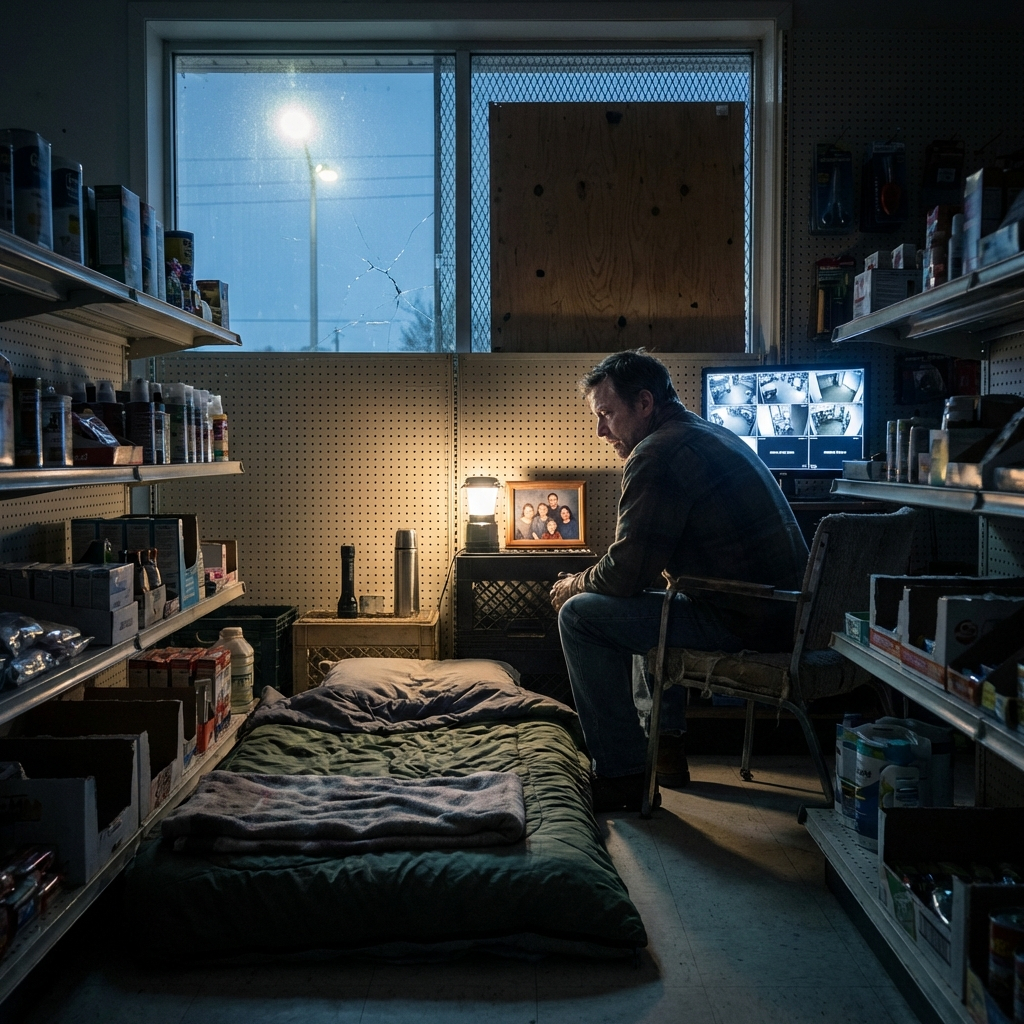
I’ve spent decades working with business owners facing impossible choices. But when I read about Michael Sund sleeping in his shop after the third burglary attempt in a year, something shifted in how I think about business risk.
This isn’t just about stolen inventory.
This isn’t just about stolen inventory.
Sund’s story represents something far more insidious happening to small businesses across the country.
The first break-in came in April when someone took an axe to his front door. The second in January cost him $10,000 in stock. Now he’s camping out in his own business, afraid to go home. One of his young children is traumatised by the incidents.
The real damage isn’t showing up on any insurance claim. It’s accumulating in ways that most business advisers never account for when they talk about risk management or business continuity planning.
The Arithmetic of Repeated Crime
When Sund lost $10,000 in stock, that’s the visible cost. His insurance might cover some of it. He can restock. He can fix the door.
These are quantifiable problems with quantifiable solutions.
But here’s what the spreadsheet doesn’t capture:
Sund is now sleeping in his shop. That means he’s not sleeping in his home. He’s not present with his family.
His child is dealing with trauma that will likely require professional support. His wife is managing the household alone whilst worrying about his safety.
The 90% of small business retailers who’ve experienced theft aren’t just dealing with missing products. They’re dealing with what comes after.
I’ve worked with enough business owners to know what this pattern looks like. The first incident shakes you. The second one makes you angry. The third one breaks something fundamental in how you relate to your business.
Sund is now operating from fear rather than strategy.
What Leaks When You Can’t Sleep
In my work, I focus on identifying what’s leaking value from a business. Usually, it’s operational inefficiencies, unclear pricing strategies, or leadership gaps.
But repeated crime creates leaks that most people never consider:
Decision-making capacity deteriorates when you’re running on fear and exhaustion. Sund can’t be making optimal business decisions whilst sleeping on his shop floor. The mental load of constant vigilance doesn’t leave room for strategic thinking about growth, staffing, or market positioning.
Staff retention becomes nearly impossible. Research shows that more than half of retailers affected by crime have considered leaving the industry entirely. If Sund has employees, they’re watching their boss sleep in the shop. What message does that send about workplace safety?
Family stability erodes. One traumatised child. One absent parent. One household operating under constant stress. These aren’t business costs in the traditional sense, but they absolutely affect business performance.
Time horizon collapses. Sund has moved from thinking about building a sustainable business to thinking about surviving until tomorrow. When your planning horizon shrinks from years to days, you’ve already lost something critical.
The research on burglary victims tells us it takes an average of seven months before things return to normal. For some people, they never do.
Seven months of operating below capacity. Seven months of compromised decision-making. Seven months of family strain. How do you quantify that in a profit and loss statement?
The Psychological Toll Nobody Discusses
I’ve sat across from business owners who look defeated in ways that have nothing to do with their bank balance. Sund’s decision to sleep in his shop isn’t irrational.
It’s a trauma response.
When someone takes an axe to your front door, they’re not just breaking glass. They’re breaking your sense of control over your own enterprise.
The data shows that 92% of independent retailers feel their mental health has been damaged by crime and abuse. That’s not a small subset of vulnerable individuals. That’s nearly everyone.
What happens to a business when the person running it is operating from chronic anxiety?
You make defensive decisions instead of growth decisions. You pull back instead of pushing forwards. You start thinking about exit strategies instead of expansion strategies.
Sund has already said he might have to close if the burglaries continue. That’s not a business decision based on market conditions or competitive pressure. That’s a surrender to circumstances that have become psychologically unbearable.
The Cascade Effect on Operations
Let me break down what’s probably happening in Sund’s business right now:
Morning operations are compromised because he’s exhausted from sleeping on a shop floor. His judgement is impaired. His patience is thin. His ability to handle customer service issues or staff concerns is diminished.
Inventory management becomes reactive rather than strategic. He’s probably over-ordering security equipment and under-investing in stock that actually generates revenue. His purchasing decisions are driven by fear rather than demand.
Customer experience suffers when the owner is visibly stressed and sleep-deprived. People pick up on that energy. It affects how they feel about shopping in the shop.
Financial planning goes out the window. How do you forecast next quarter’s revenue when you’re not sure you’ll still be in business? How do you justify investing in marketing or staff training when you’re spending money on additional security measures?
Supplier relationships may deteriorate if he starts missing payments or changing orders unpredictably due to cash flow concerns.
This is what I mean when I talk about bringing clarity to complexity. The surface problem is burglary. The actual problem is a complete destabilisation of business operations, family life, and personal wellbeing.
What the Insurance Doesn’t Cover
I work alongside business owners and their accountants to identify what’s really holding a business back. In Sund’s case, the accountant can track the $10,000 in stolen stock. The insurance assessor can calculate replacement costs.
But nobody’s accounting for:
The opportunity cost of time spent dealing with police reports, insurance claims, and security installations instead of serving customers or developing the business.
The relationship cost with family members who are bearing the emotional burden of these incidents.
The health cost of chronic stress and sleep deprivation, which will eventually manifest in physical symptoms that further impair business performance.
The reputation cost if word spreads that this business is repeatedly targeted, potentially making customers nervous about shopping there.
The strategic cost of operating in survival mode rather than growth mode, falling behind competitors who aren’t dealing with this level of disruption.
These costs compound over time. They don’t appear in any ledger, but they’re real. They’re leaking value from the business every single day.
The Impossible Calculation
At what point does the cumulative cost of staying open exceed the cost of closing? That’s not a question about stolen inventory. That’s a question about human sustainability.
Sund is paying a price that goes far beyond $10,000 in missing stock. He’s paying with his sleep, his family relationships, his mental health, and his sense of security. His child is paying with trauma that may require years to process.
When I work with business owners, I push them to look at what’s really happening beneath the surface numbers. In this case, the surface number is theft. The beneath-the-surface reality is a complete erosion of the foundations that make business ownership worthwhile.
You don’t start a business to sleep on the shop floor. You start a business to build something, to serve customers, to create value, to support your family. When crime strips away all of those purposes and leaves you with nothing but fear and vigilance, what exactly are you protecting?
The Questions We Should Be Asking
What support systems exist for small business owners facing repeated crime? Not just insurance payouts, but actual psychological and operational support to help them maintain business viability whilst dealing with trauma.
How do we measure the true cost of crime on small businesses when so much of the damage is invisible to traditional accounting methods?
What’s the community cost when businesses like Sund’s close because the psychological toll becomes unbearable? Who fills that gap in the local economy?
How do we help business owners make rational decisions about business continuity when they’re operating from chronic stress and fear?
I don’t have simple answers to these questions. But I know that pretending the only cost is stolen inventory is dangerously inadequate.
What Actually Helps
I’ve seen business owners recover from situations like this, but it requires acknowledging the full scope of what’s been damaged:
Immediate security improvements are necessary but not sufficient. Sund needs to feel safe, but he also needs to address the psychological impact of what’s already happened.
Professional support for trauma isn’t optional. His child needs it. He probably needs it. His family unit needs it. This isn’t weakness. This is recognising that repeated victimisation has real psychological consequences that don’t resolve on their own.
Operational restructuring to reduce his personal burden. If he’s sleeping in the shop, he can’t also be managing every aspect of the business. Something has to give, and it should be the operational load, not his health.
Financial planning that accounts for the true costs, not just the insured losses. This means working with advisers who understand that the business is currently operating at diminished capacity.
Community and peer support from other business owners who’ve faced similar situations. The isolation of being repeatedly victimised compounds the trauma. Connection helps.
Honest assessment of whether continuing is viable. Sometimes the bravest decision is to close a business that’s destroying your health and family relationships. That’s not failure. That’s recognising when the cost has become too high.
The Broader Implications
Sund’s situation isn’t unique. It’s representative of what’s happening to small businesses across the country when crime becomes a persistent reality rather than an isolated incident.
The 90% of retailers who’ve experienced theft aren’t all sleeping in their shops. But they’re all calculating costs that don’t appear on any balance sheet. They’re all making decisions from fear rather than strategy. They’re all wondering at what point the dream of business ownership becomes a nightmare of constant vigilance.
When I talk about bringing clarity to complexity, this is what I mean. The complexity isn’t just in the operations or the finances. It’s in the human cost of trying to build something whilst someone else is actively trying to tear it down.
Sund deserves better than sleeping on his shop floor. His child deserves better than being traumatised by repeated break-ins. His family deserves better than the constant stress of wondering if tonight will bring another incident.
But more than that, we need to start accounting for the real costs of crime on small businesses. Not just the stolen goods, but the stolen sleep, the stolen peace of mind, the stolen future that gets replaced with survival mode.
That’s the hidden cost nobody’s calculating. And until we do, we’ll keep losing businesses and business owners to a problem that looks simple on paper but destroys lives in reality.
I’ve built businesses and I’ve helped others build theirs. I know what it takes to succeed. But I also know what it takes to recognise when the cost has become too high.
Sund is facing that calculation right now. And whatever he decides, I hope he gets the support he needs to make that decision from a place of clarity rather than fear.
Because that’s what’s really been stolen here. Not just inventory.
Clarity itself.

Leave a comment