
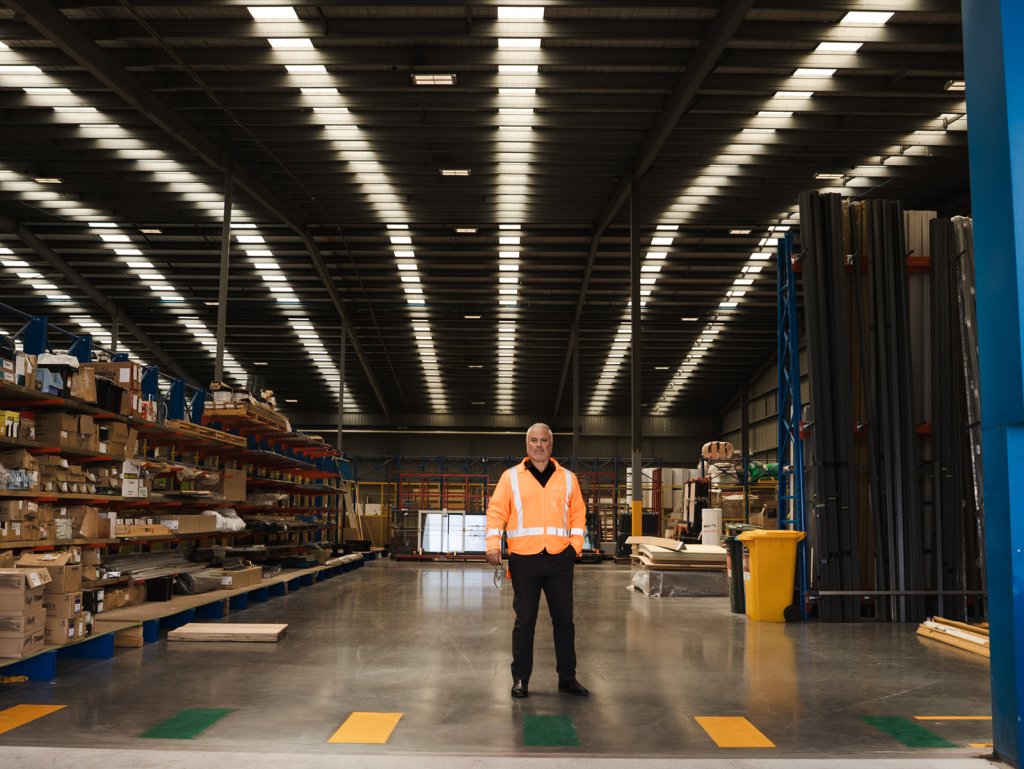
I’ve spent three decades working inside businesses that looked profitable on paper but bled money in ways their accountants never caught.
The pattern repeats everywhere.
A manufacturing business with healthy margins loses $180,000 a year because their production scheduler manually reworks spreadsheets for 12 hours a week. A professional services firm pays market rates but watches half their billable hours vanish into admin tasks that create zero client value. A retail operation celebrates revenue growth whilst inventory inefficiencies silently drain six figures annually.
Traditional accounting captures what you spend. It rarely captures what you waste.
That gap is about to become the dividing line between businesses that thrive beyond 2027 and those that don’t make it.
The 20-30% Revenue Drain You’re Not Tracking
Research firm IDC found that inefficiency costs companies anywhere from 20% to 30% of their revenue every year.
Not in one dramatic moment. Gradually. In ways that are difficult to spot.
If you run a $10 million business, there’s a good chance $2-3 million of that is being burned on things that don’t create value. McKinsey puts the same figure on operating expenses: 20-30% wasted on inefficiency.
Your P&L doesn’t show this. Your balance sheet doesn’t flag it. Your accountant can’t see it because it’s not a line item.
It’s invisible.
I call this invisible cost accounting. It’s the discipline of tracking what traditional accounting ignores: the silent drains, the productivity dead zones, the compounding inefficiencies that slowly choke profitability.
And it’s becoming non-negotiable.
Why 2027 Is the Deadline
The pressure is mounting from multiple directions.
Global spending on digital transformation is projected to reach $4 trillion by 2027, according to IDC. Businesses are investing at unprecedented levels in technology, talent, and change management.
But here’s what the projections don’t tell you: hidden costs often derail ROI.
A first-quarter 2025 management consultancy study on SAP migrations revealed something troubling. Only 8% of companies completed their migrations on schedule. 60% exceeded budgets, with one in four being significantly over budget. 65% identified severe to very severe quality deficiencies after migration.
The 2027 SAP deadline is just one example. But it exposes a broader truth: traditional accounting methods fail to capture the true cost of technology transformations.
Unanticipated expenses like technical debt, adoption friction, and rising cloud spend outweigh planned savings when you don’t have proactive governance.
The businesses that survive aren’t the ones with the biggest budgets. They’re the ones that can see where money actually goes.
The Silent Business Killer Nobody Talks About
Small businesses rarely fail from one big mistake.
It’s usually the slow bleed of tiny, overlooked costs that pile up until profitability disappears. Operational inefficiencies, poor pricing strategies, and uncontrolled overhead costs silently drain six to seven figures from yearly profits.
By the time you realise it, it’s too late.
I’ve seen this pattern play out dozens of times. The owner knows something feels wrong. Cash flow is tight despite decent revenue. Margins are thinner than they should be. But when they look at the books, everything appears normal.
That’s because the books are designed to track transactions, not waste.
Consider labour costs. When staff earning $30 per hour spend 10 hours per week on manual tasks that could be automated, that’s $15,600 per year lost per employee. Studies show employees spend 30% of their time on basic tasks that automation could handle.
Your accounting system records their wages. It doesn’t flag that 30% as a recoverable cost.
That’s invisible cost accounting territory.
The Productivity Dead Zone
Knowledge workers spend 60% of their time on “work about work” instead of the skilled tasks they were hired to perform.
The average employee is productive for just 2 hours and 23 minutes of an 8-hour workday.
Disengaged workers cost the global economy $438 billion in a single year.
I’ve watched businesses hire talented people, pay market rates, and then wonder why output doesn’t match investment. The answer is usually buried in how time actually gets spent.
Meetings that could have been emails. Status updates that duplicate project management tools. Manual data entry because two systems don’t talk to each other. Searching for information that should be centralised.
None of this shows up as a cost centre. All of it drains profitability.
Employee turnover makes it worse. In 2026, the benchmark for replacing a mid-level manager sits between 1.5x to 2.0x their annual salary. For specialised roles, that figure climbs to 250%.
It takes an average of 8 months for a new hire to reach full ROI potential. Months 1-3 represent a net loss—the employee requires more training hours than they produce in value.
Traditional accounting captures recruitment fees and onboarding costs. It doesn’t capture the productivity gap or the institutional knowledge that walked out the door.
What Invisible Cost Accounting Actually Looks Like
I’m not suggesting you need a degree in data science or a team of analysts.
Invisible cost accounting starts with asking different questions.
Where does time go that doesn’t create value?
Map your team’s actual activities for a week. Not what their job descriptions say. What they actually do. You’ll find patterns. Repeated manual tasks. Workarounds for broken processes. Time spent fixing problems that shouldn’t exist.
What decisions are we making without full cost visibility?
When you evaluate a new software tool, do you factor in training time, adoption friction, and integration complexity? When you price a service, do you account for the hidden labour in delivery?
What small inefficiencies are compounding?
A 10-minute daily task doesn’t sound significant. Multiply it by 20 employees over a year. That’s 867 hours. At $30 per hour, you’ve just found $26,000 in invisible costs.
Where are we paying for things we don’t use?
Software subscriptions for tools nobody logs into. Inventory sitting in warehouses generating zero return. Office space that’s half-empty. These show up as expenses, but their true cost includes the opportunity cost of that capital.
The businesses I work with that excel at this don’t have fancy systems. They have discipline. They track what matters. They question assumptions. They test whether activities actually drive value.
The Competitive Advantage Nobody Sees Coming
Whilst your competitors optimise what’s visible, you’ll be eliminating what’s invisible.
That’s where the real margin lives.
I’ve seen businesses recover 15-20% of operating costs by applying invisible cost accounting principles. Not through dramatic restructures or mass redundancies. Through systematic identification and elimination of waste.
The advantage compounds. Every dollar you recover from invisible costs can be reinvested in growth, innovation, or simply better margins. Your competitors are still bleeding that dollar.
This matters more as markets tighten. When revenue growth slows, the businesses that survive are the ones with operational discipline. The ones that know where every dollar goes and why.
What You Can Do This Week
Start small. Pick one area of your business where you suspect waste but lack visibility.
Track it. Not forever. Just for a week or two.
A professional services firm I worked with tracked how long proposals actually took to create. They assumed 2-3 hours. Reality was 8-12 hours once you included all the back-and-forth, version control issues, and approval bottlenecks.
That insight alone justified investing in proposal automation and saved them 400+ hours per year.
Another business tracked how often their production team had to redo work because of unclear specifications. Turned out it was costing them $75,000 annually. They fixed the specification process. Problem solved.
You can’t fix what you can’t see.
Invisible cost accounting gives you vision. It shows you where profitability is leaking. It reveals which activities generate value and which just generate activity.
The businesses that master this by 2027 will have a structural advantage that’s hard to replicate. They’ll operate leaner, move faster, and maintain margins whilst others struggle.
The Choice Ahead
Traditional accounting will always have its place. You need to know your revenue, your expenses, your assets, and your liabilities.
But that’s not enough anymore.
The businesses I see thriving aren’t just tracking what they spend. They’re tracking what they waste. They’re measuring productivity, not just payroll. They’re quantifying inefficiency, not just efficiency.
They’ve moved beyond asking “what did this cost?” to asking “what is this actually costing us?”
That’s the shift. That’s invisible cost accounting.
And in my experience, the businesses that make this shift early are the ones still standing when the pressure mounts.
2027 isn’t far away. The time to start seeing what’s invisible is now.
If you’re running a business and this resonates, you’re probably already aware something’s not quite right. The numbers look okay, but the reality feels different.
That’s your signal.
Start asking the questions traditional accounting doesn’t answer. Start tracking what falls through the cracks. Start treating invisible costs as seriously as visible ones.
Because the businesses that don’t? They’ll keep wondering why their margins are shrinking whilst their competitors pull ahead.
And they’ll never see what hit them.

Leave a Reply